Mother of God and Queen of Heaven (Jewish tradition from O.T.)
Immaculate Conception/Without Sin
Assumption into Heaven (science)
Hail Mary and the rosary
New Ark of the Covenant and new Eve
Let's take a moment for appreciation of Joseph
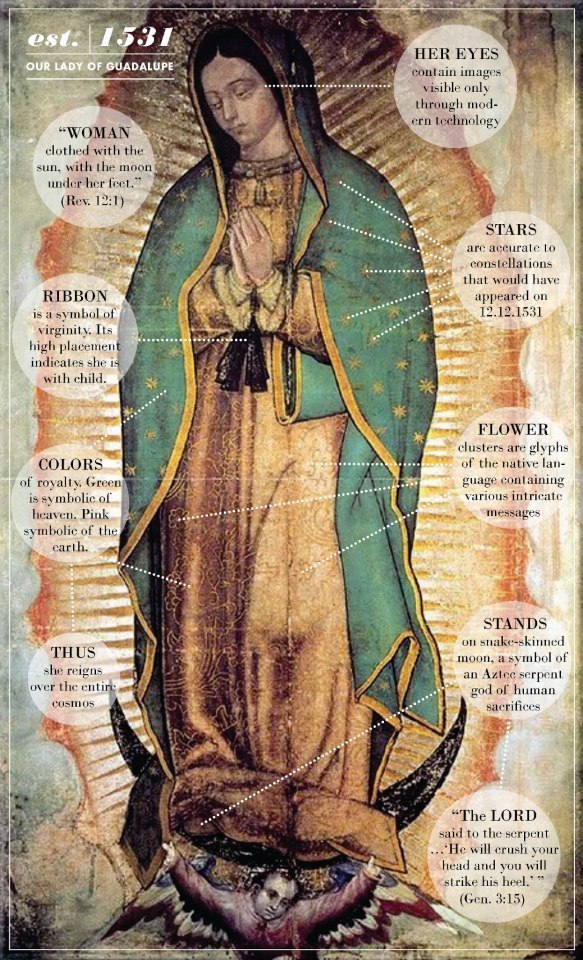
Image from: https://saintantoninus.org/pictures/2017/9/Our%20Lady%20of%20Guadalupe-1.jpg
There are many reasons why Catholics believe that Mary stayed a virgin her whole life. Some of these reasons come from scripture placed in context of history and culture of the time and others from tradition.
Context at the Annunciation:
Luke 1:26-38 tell the story of the Annunciation- where Gabriel visits Mary to tell her about God's plan for her as long as she consents to it. In verse 31, the angel says "Behold, you will conceive in your womb and bear a son, and you shall name him Jesus" and then verse 34, Mary asks the angel "How can this be, since I have no relations with a man?". In biblical times, a wedding as we currently understand it was actually broken into two parts- betrothal and wedding. Once betrothed, a woman was officially considered the wife but she still lived in her father's house (https://www.jewishencyclopedia.com/articles/3229-betrothal and https://www.myjewishlearning.com/article/ancient-jewish-marriage/). The "wedding" was when her father walks her over to her husband's house for her to start her life there (https://www.myjewishlearning.com/article/ancient-jewish-marriage/). Matthew 1:18 also confirms this but in a less detailed way: "Now this is how the birth of Jesus Christ came about. When his mother Mary was betrothed to Joseph, but before they lived together...". Once the angel came to Mary, she already was legally married. However, she was still confused as to how she could have a child. For any other woman in the same stage as Mary, they would have known that they were about to start having children- it would be a "no, duh" kind of moment. However, we see confusion from Mary even though the angel uses the future tense. We also know that her confusion in this moment is not from doubting God, like Zechariah did in Luke 1:18-19, since she was not rebuked like he was after asking how it would happen. Putting this together, we see Mary has no intent to enter into a physical relationship within her marriage. Matthew 1:25 is often used as a rebuttal to this due to the inclusion of "until" in "He had no relations with her until she bore a son, and he named him Jesus". The "until" does not mean that they had relations after the birth. It is like saying "I can't learn to drive until I'm 15"- that does not mean that I am going to learn to drive at 15 or thereafter. Or for a more religious example, 2 Samuel 6:23 says "And Saul's daughter Michal bore no children from that day on until the day she died". It is safe to say that Michal did not start having children the day after she died. Continuing on, the opportunity for a chaste marriage also has biblical roots. Chapter 30 in the Book of Numbers lays out rules for vows made before and after marriage. If Mary had made a vow of virginity, then Joseph would have been made aware of it. If he did not object to the vow, then he would have also been permanently bound by her vow.
At the foot of the cross in context:
John 19:25-27 describes one of the last things Jesus took care of before dying. In these verses, he sees that Mary and one of his disciples are at the foot of the cross and Jesus says to Mary "Woman, behold, your son." (verse 26) and to his disciple, "Behold, your mother" (verse 27). In biblical times, women had no way to fend for themselves on their own so if their husband died before they did, they either had to go live with their father (if still alive) or with an adult son (https://www.biblicalarchaeology.org/daily/people-cultures-in-the-bible/people-in-the-bible/widows-in-the-bible/). If Mary had other sons, like how Acts 1:14 says, then Jesus giving her over to one of his disciples instead of an adult brother would have meant dishonoring his family. This would be very out of character for Jesus as we know it would go against His nature. Therefore, there must not have been any biological sons to hand Mary off to, contrary to multiples instances where scripture states that Jesus had brothers. We must look more into the word "brothers" and "sisters" used in the context of passages like Genesis 13:8, Genesis 14:14-18, Mark 6:3, John 3:12, and Acts 1:14, just to name a few. In the Old Testament passages, the word "brother" or "brethren" is used with a very wide definition to include anyone from actual brother to anyone within the same tribe or kinship (https://www.quotescosmos.com/bible/bible-concordance/H251.html). When the Old Testament was translated into Greek, the word "adelphoi" is used and then the same word was used in the New Testament. The Greek word has just as large a range of meaning as the original Hebrew word from the Old Testament. Because of this, a family tree must be established from context of the New Testament. Through various passages, it can be established that none of the people described as Jesus' brothers are blood brothers. The website https://catholicstraightanswers.com/did-jesus-have-blood-brothers-and-sisters/ does a great job of breaking down the relationships.
